The first 13 ads looked sharp. I cut all 13.
I wanted retargeting ads for sellers. So I asked Claude for ads built on fear: the mistake, the worst case, the price cut.
We made 13. A day counter that turned orange on day 46. A receipt that printed the cost of overpricing. A red EXPIRED stamp. Each one had a snappy headline and a lot of motion.
I looked at all 13 on one page and said it out loud: I don’t like any of these ads really.

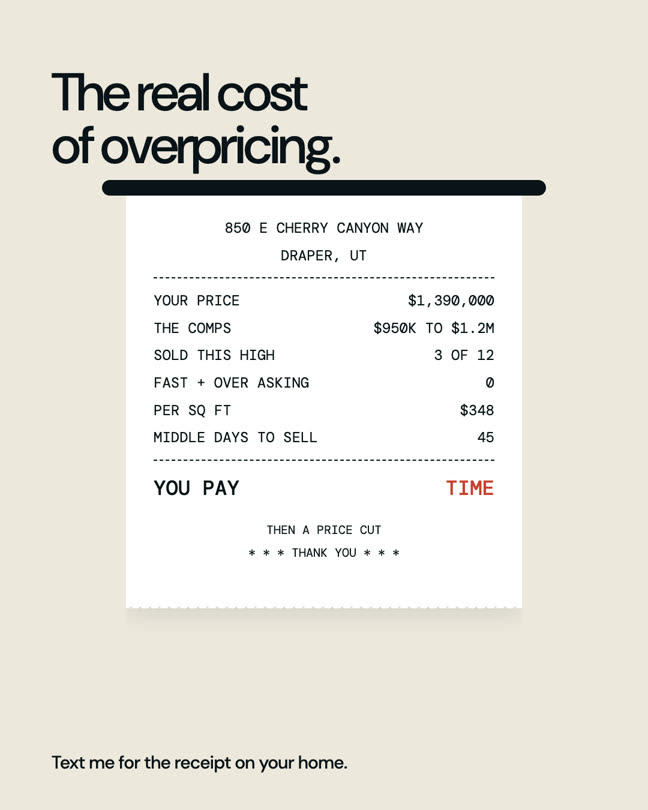
Here is what was wrong.
- Each ad tried to be the whole message. A seller got a clever line, then nothing to do with it.
- Each ad sold the agent. Every one ended with “Text me.” A scared seller is not ready to text anyone.
- Fear with no help reads as a scare. We named the problem and gave no answer.
An ad is a door. The article is the room.
The fix was one sentence in the prompt. The ad is the top of an article. It is not a slogan.
So the ad stopped trying to win the seller in 5 words. It only had to earn one click. The headline became the question the seller is already asking. Under it sits a peek at the answer, the agent’s name and photo, and a Read button.
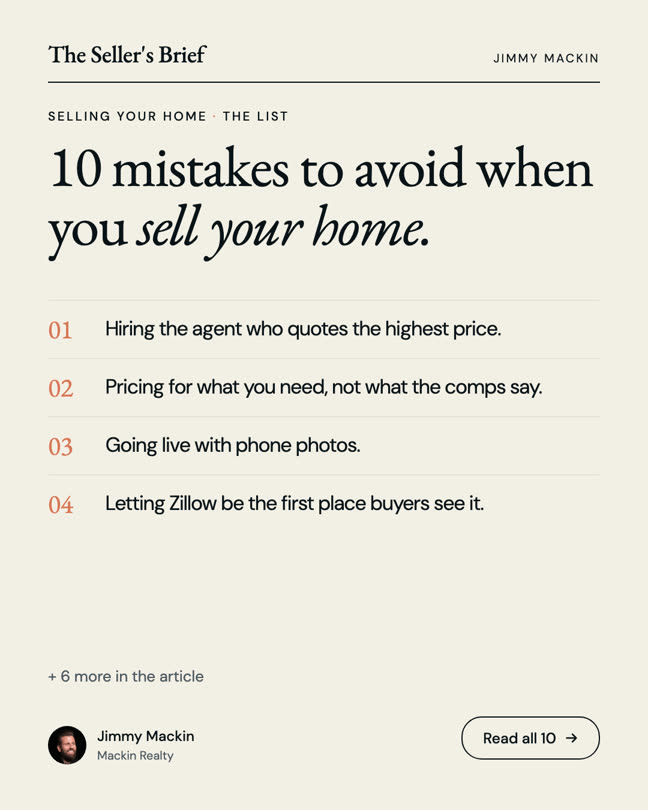
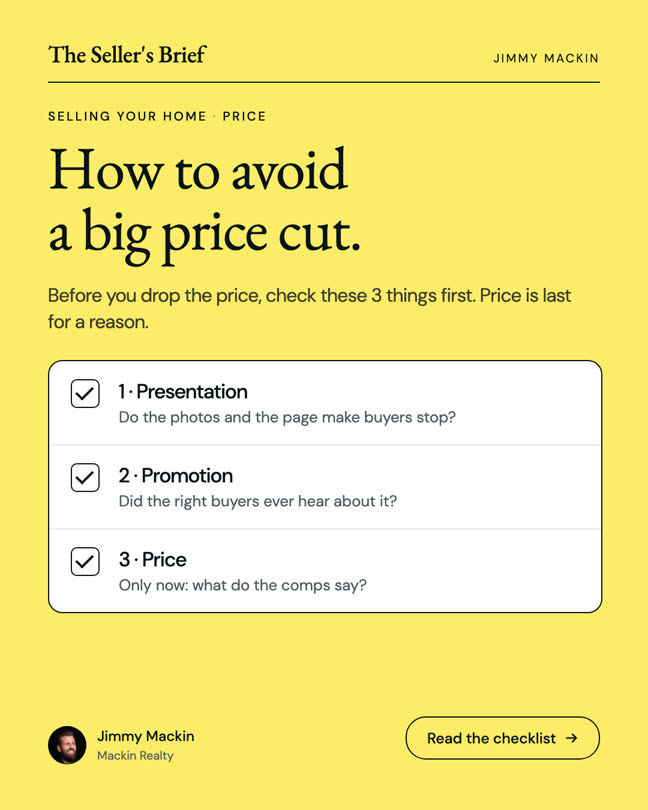
“Do not sell the agent. Sell the click.”@jimmymackin · Nov 10, 2026
Start with the fear. The design comes later.
Next I stopped asking for ads and asked for fears. What does a seller type into a search bar at night? We sorted the answers into 3 groups.
Each fear is an article, and each article gets an ad. This list is my pick. It is not survey data, so add the fears you hear from your own sellers.
The house isn’t working
- My house isn’t selling. What do I do?
- Should I drop my price?
- Why is nobody coming to see my house?
- Showings, but no offers. What’s wrong?
- Buyers keep saying the same thing.
- My house is older. How do I get buyers excited?
- Fix it up, or sell it as is?
- My listing expired. Now what?
- Why do buyers scroll past my listing?
- What do I check before a price cut?
- Is my house priced right?
- Do I need to stage my house?
Life is forcing the sale
- We need to sell before we can buy.
- I have to move fast. Will I lose money?
- I inherited a house. Where do I even start?
- Is it a mistake to sell in the winter?
- Rates are high. Will anyone buy my house?
- My neighbor sold for less. Does that hurt me?
- What happens if I overprice?
- What 3 things sell a home?
- How long should my house take to sell?
The what ifs
- What if I sell, and prices go up?
- What if it sells and I have nowhere to go?
- What if the buyer backs out?
- What if the appraisal comes in low?
- What if the inspection finds something big?
- How much will I really walk away with?
- Is my agent’s plan any good?
- The worst thing that can happen when you sell.
- What’s the worst thing my house can do?
Then borrow a look from outside real estate.
With the fears set, design got easy. I sent Claude work I admire from other fields and gave it one rule: take 2 or 3 qualities from the reference and never copy its layout.
Ten looks came out of it. Each one has its own prompt below.
Build your own.
Fill in the brackets and paste this into Claude. Pick one fear from the list and one look from below. Run it once for each fear.
Make me a display ad that promotes an article for home sellers.

ABOUT ME
- My name: [your name]
- My brokerage: [your brokerage]
- My market: [your city]
- Years selling homes: [your number]
- My photo: [attach your headshot]

THE FEAR
- [Paste one fear from the list, in the seller's own words]

THE LOOK
- [Paste the look prompt you picked]

MY REAL PROOF
- [Paste real numbers from your own market, with the source. Or write: none]

RULES
- The ad is the top of an article. It is not a slogan.
- Show these parts: a small section label, the fear as the headline, one line that promises the answer, a peek inside the article, my name and photo, and a "Read the article" button.
- Write the headline the way a seller would say it out loud. A question is best.
- Do not sell me. Sell the click.
- Use only the numbers I gave you. If I wrote "none", use no numbers.
- Short, plain words. No em dashes.
- Size 1080 × 1350. One HTML file. Add gentle motion: the headline rises word by word, and lines draw themselves.

THEN WRITE THE ARTICLE
- Write the article the ad clicks to. Answer the fear in 3 or 4 steps, with the cheapest fix first.
- End with one way to reach me.
All 33 ads, in 10 looks.
Every ad is the top of one article, at the Meta feed size. Point at an ad to watch it move. Each look has its own line to paste into the prompt.
The frame
Borrowed from ArkiveOne flat color and one thin line. The brokerage name breaks into the line.
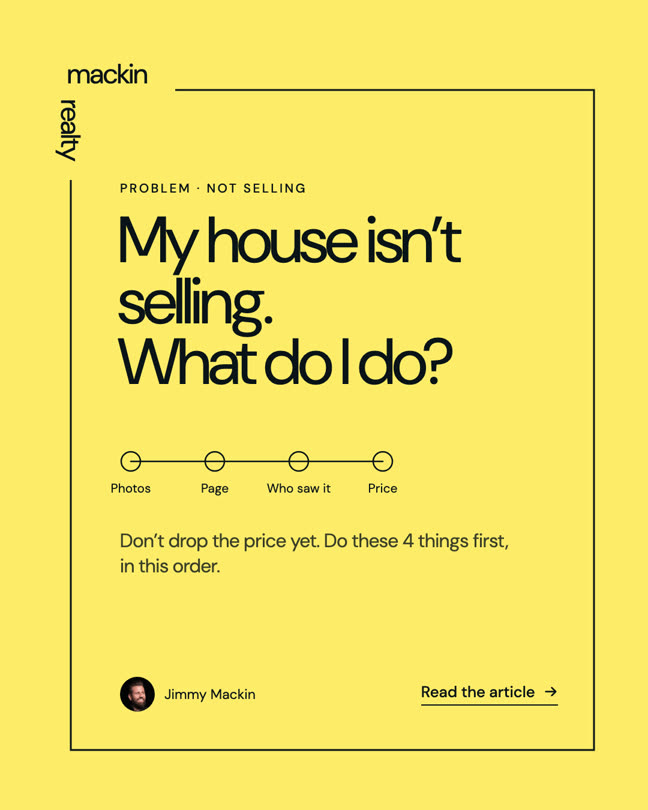
My house isn’t selling. What do I do?
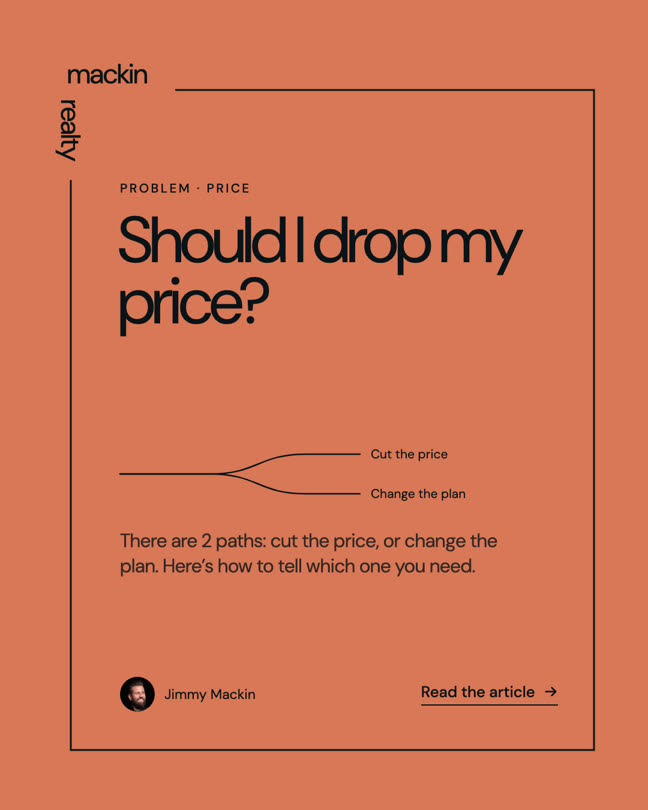
Should I drop my price?
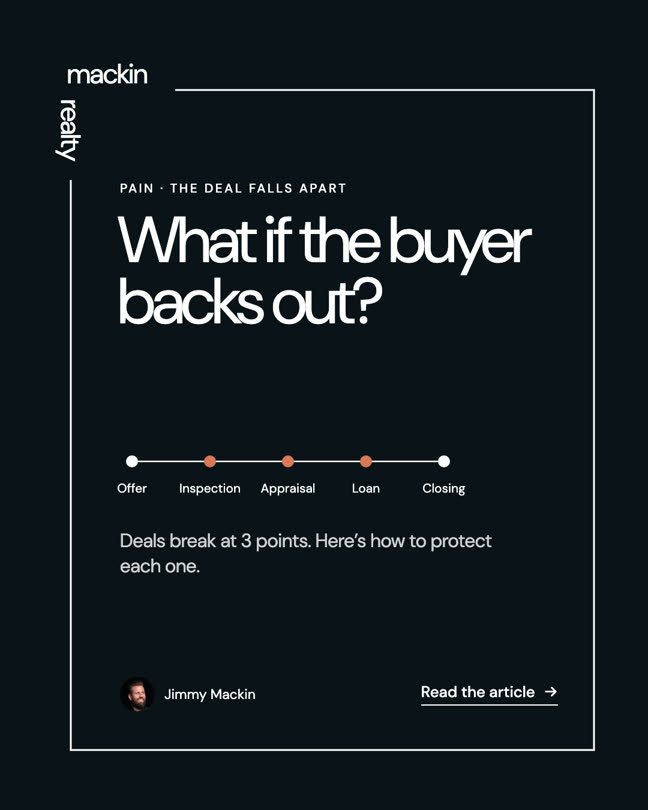
What if the buyer backs out?
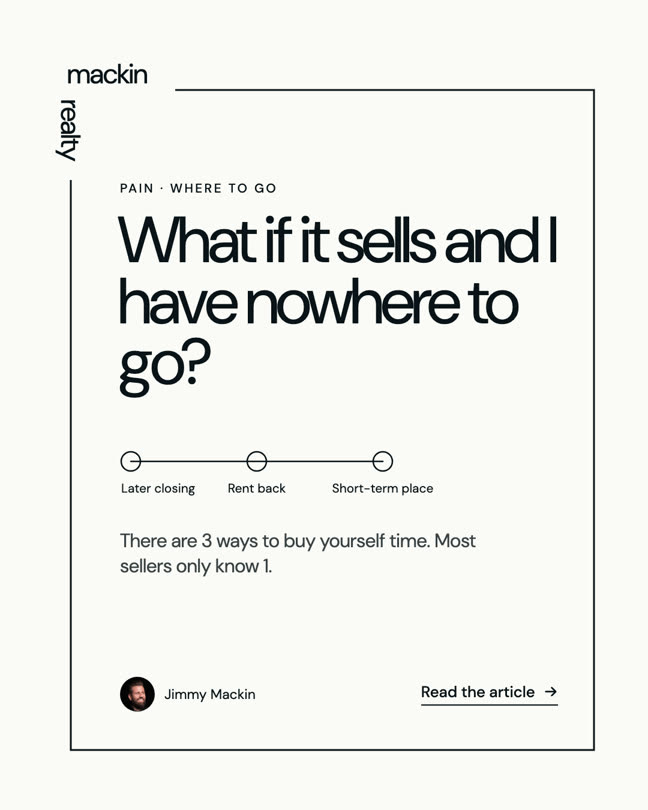
What if it sells and I have nowhere to go?
THE LOOK: the frame. One flat color fills the ad: [your brand color]. One thin line draws a frame around the content, and my brokerage name breaks into the line at the top left corner. The headline is big and plain. Motion: the line draws itself, then the headline rises word by word.
The scatter
Borrowed from Apple’s Environmental Progress ReportA white page, a bold headline, real room photos and one hand note with an arrow.
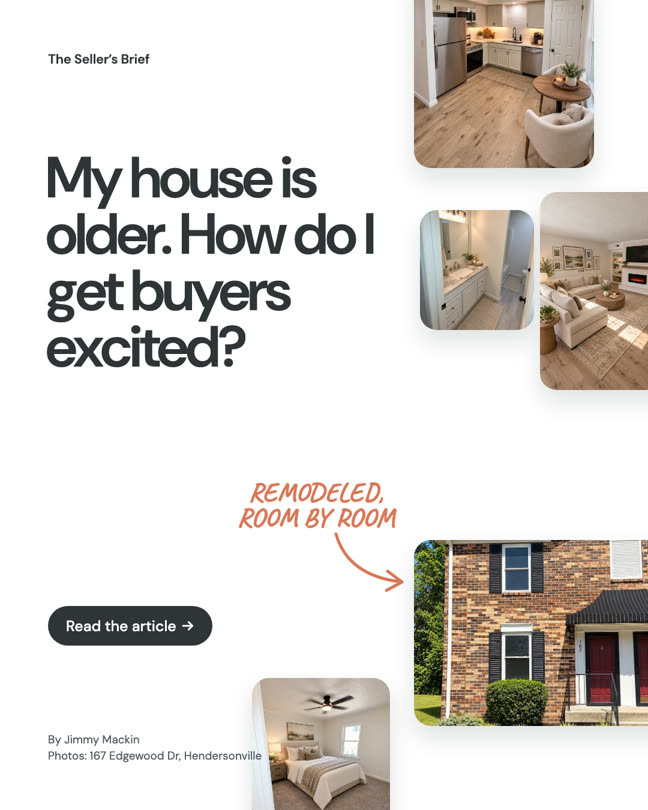
My house is older. How do I get buyers excited?
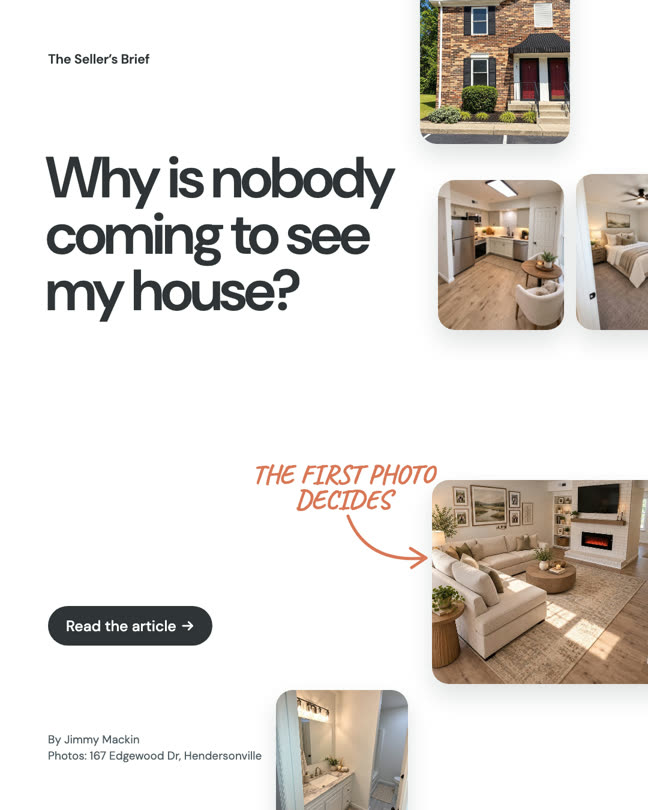
Why is nobody coming to see my house?
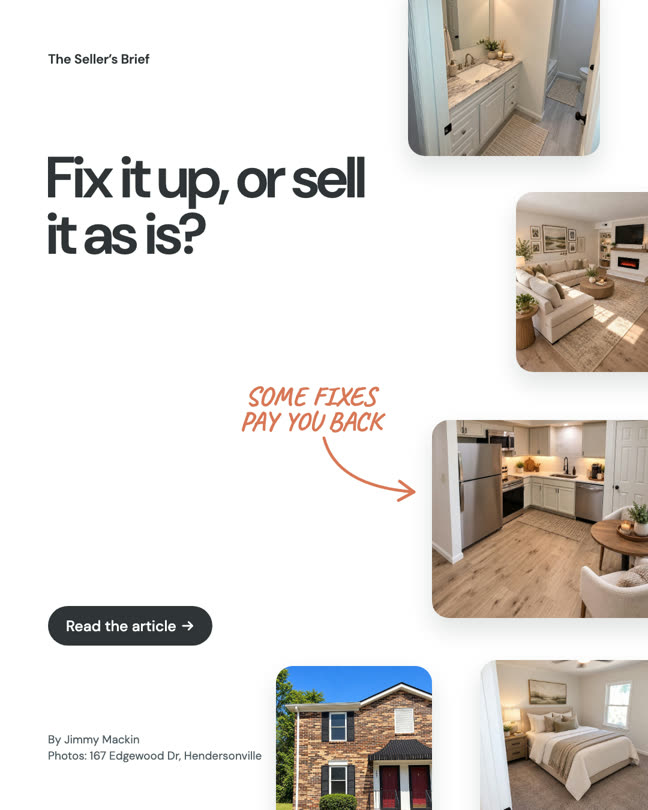
Fix it up, or sell it as is?
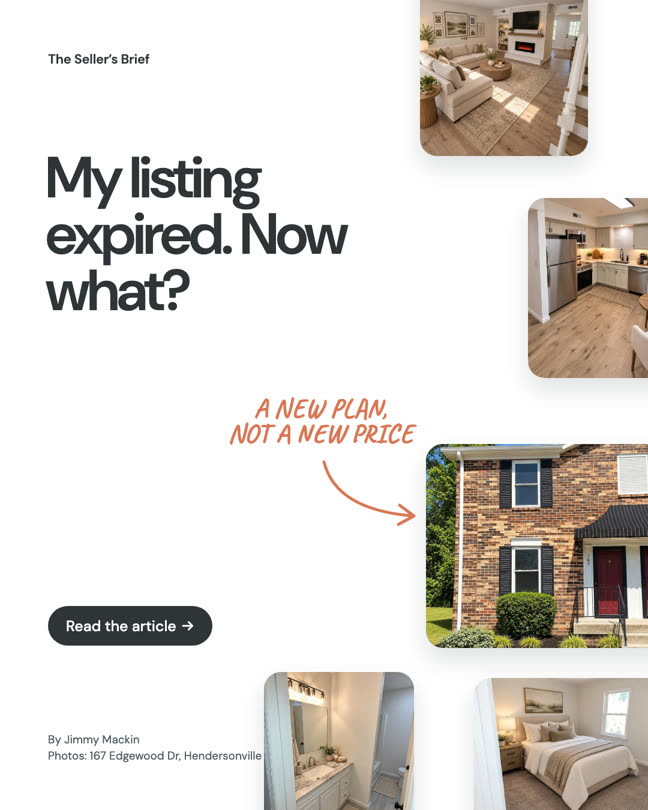
My listing expired. Now what?
THE LOOK: the scatter. A white page. A big bold headline on the left. On the right, scatter 5 real photos as rounded tiles of different sizes, some running off the edge: [attach 5 photos of one home]. Add one short hand-written note with a curved arrow that points at one photo. Motion: the photos pop in and float, and the note writes itself.
The dot field
Borrowed from Adyen’s Investor Day deckA dark field of dots that grow into diamonds around the headline.

What if I sell, and prices go up?

Rates are high. Will anyone buy my house?

How much will I really walk away with?
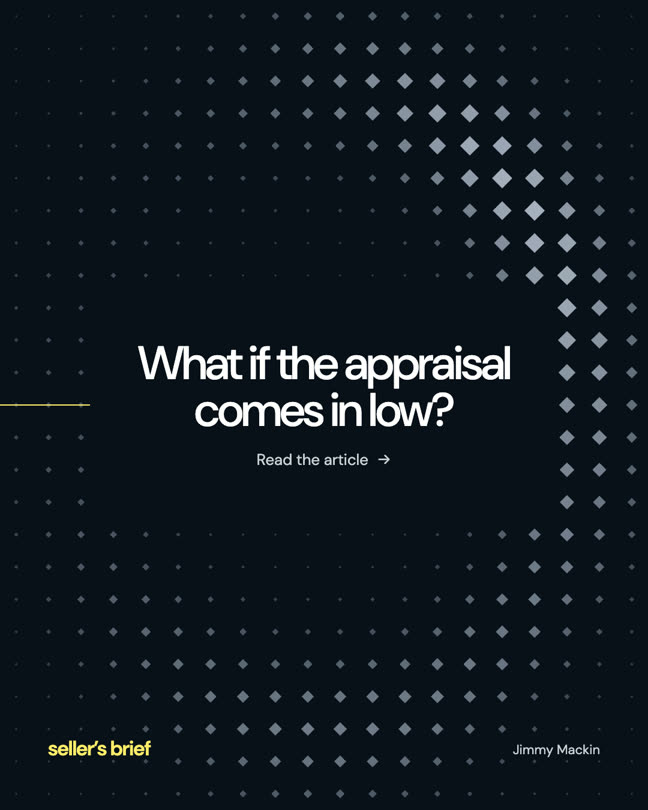
What if the appraisal comes in low?
THE LOOK: the dot field. A dark field covered in a grid of small dots. The dots grow into diamonds in a ring around the headline, which sits in a clear space in the middle. One thin line in [your accent color] comes in from the left edge. Motion: a slow wave moves through the dots.
The card row
Borrowed from Lofty’s A Year in DataA black field and tall room photos that fade back into the dark.

The worst thing that can happen when you sell.

Buyers keep saying the same thing.

Showings, but no offers. What’s wrong?

We need to sell before we can buy.
THE LOOK: the card row. A black field. A row of 5 tall rounded photo cards overlaps from left to right, and each card behind is smaller and dimmer: [attach 5 photos of one home]. The headline sits over the dark side on the left. Motion: the cards slide in, then the front card moves to the back every few seconds.
The marked-up page
Borrowed from A Runway text postA page of the article. The fear is highlighted, and two labels name the fear and the answer.
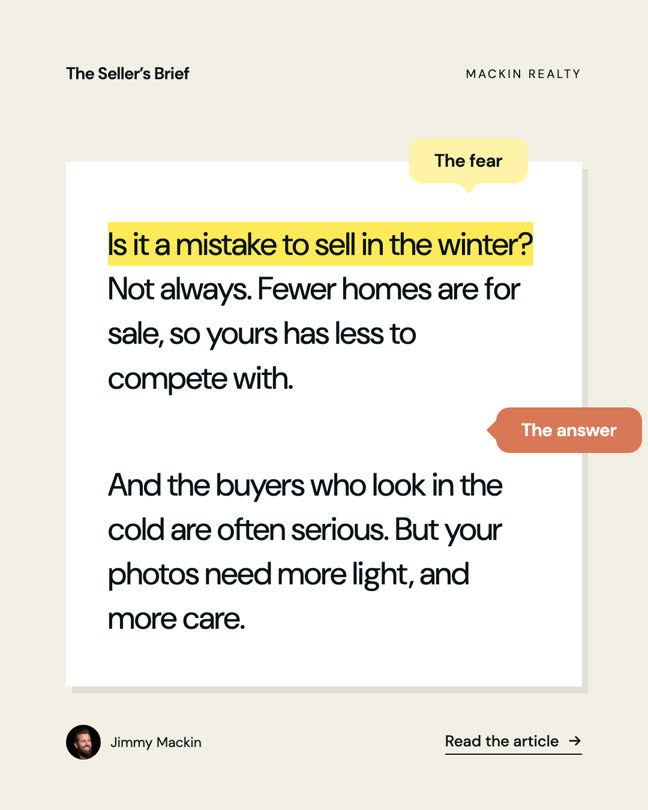
Is it a mistake to sell in the winter?
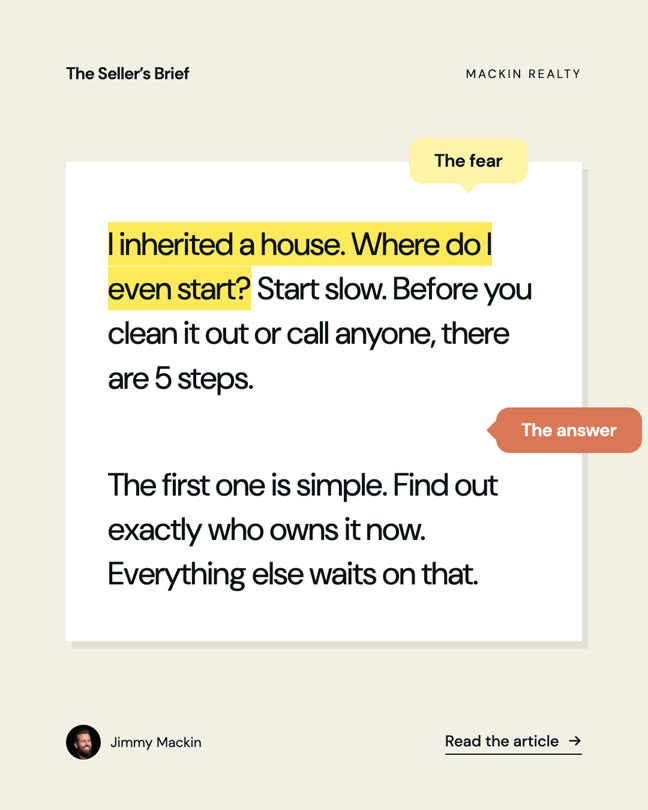
I inherited a house. Where do I even start?
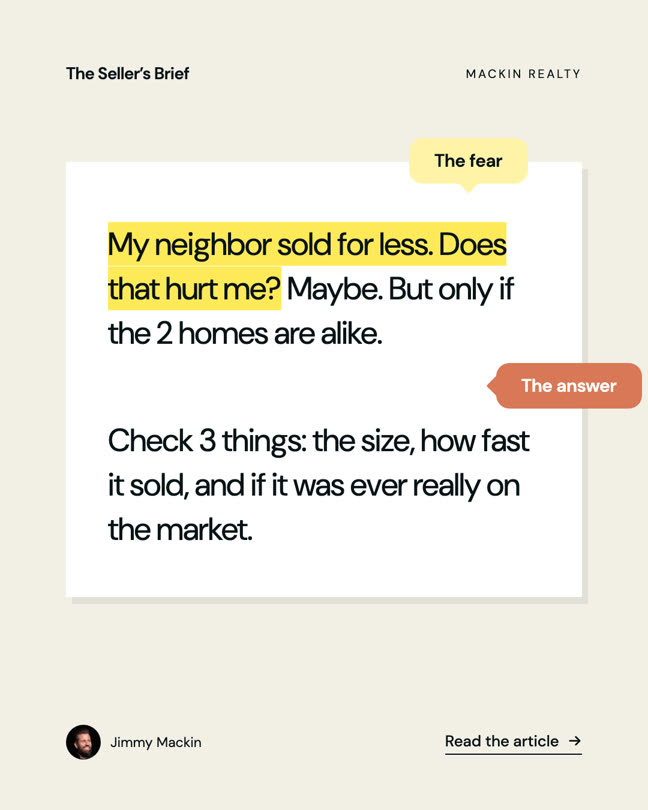
My neighbor sold for less. Does that hurt me?
THE LOOK: the marked-up page. Show a white page with the first 2 short paragraphs of the article in large type. The first sentence is the fear, with a yellow highlight. Add two small rounded labels with tails: "The fear" on the first sentence and "The answer" on the second paragraph. Motion: the highlighter sweeps across, then the labels pop on.
The dark playground
Borrowed from Runway’s dark postsSpeech bubbles, tilted cards and small bright dots on a dark field.
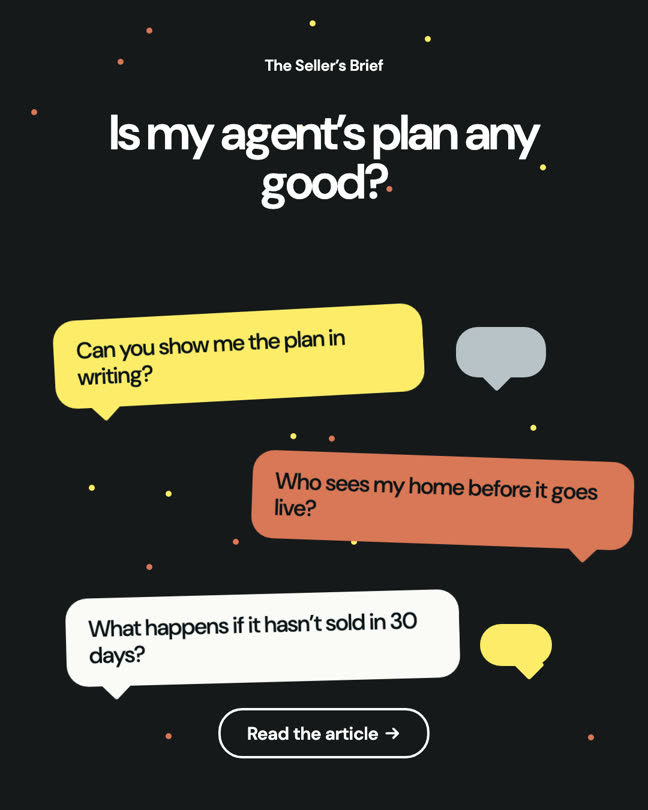
Is my agent’s plan any good?

What if the inspection finds something big?
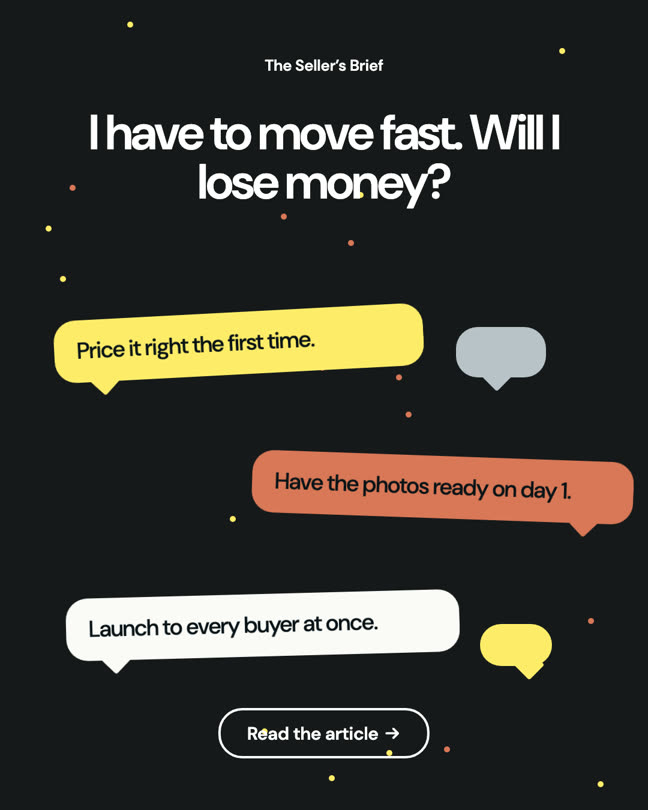
I have to move fast. Will I lose money?
THE LOOK: the dark playground. A near-black field with small bright dots. The headline is centered at the top. Under it, show 3 speech bubbles in flat colors, each with one short line from the article, or 2 tilted outlined cards with one choice on each and a cursor that picks one. A "Read the article" pill sits at the bottom. Motion: the dots twinkle and the bubbles pop in and float.
The agent’s note
Borrowed from An a16z founder noteA short letter from the agent, signed, that leans into one fear.
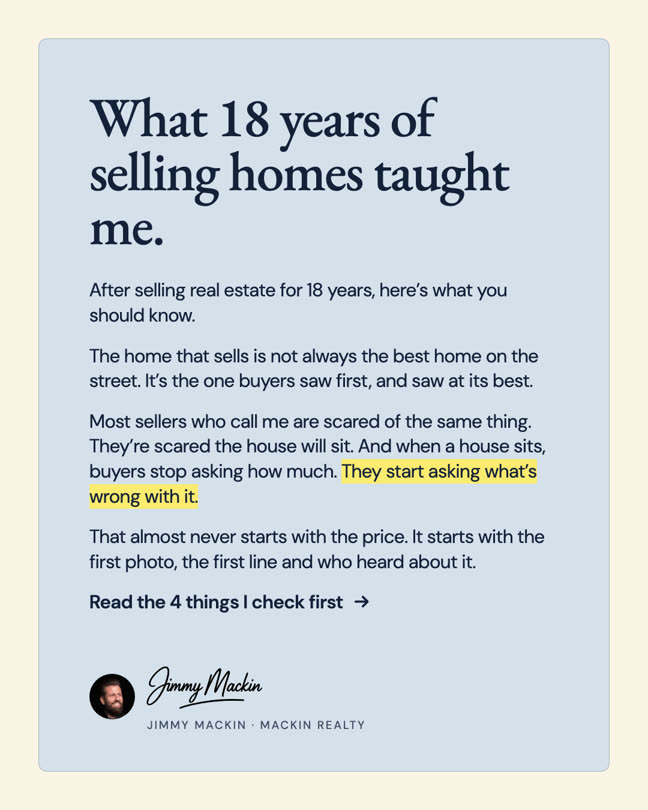
What 18 years of selling homes taught me.
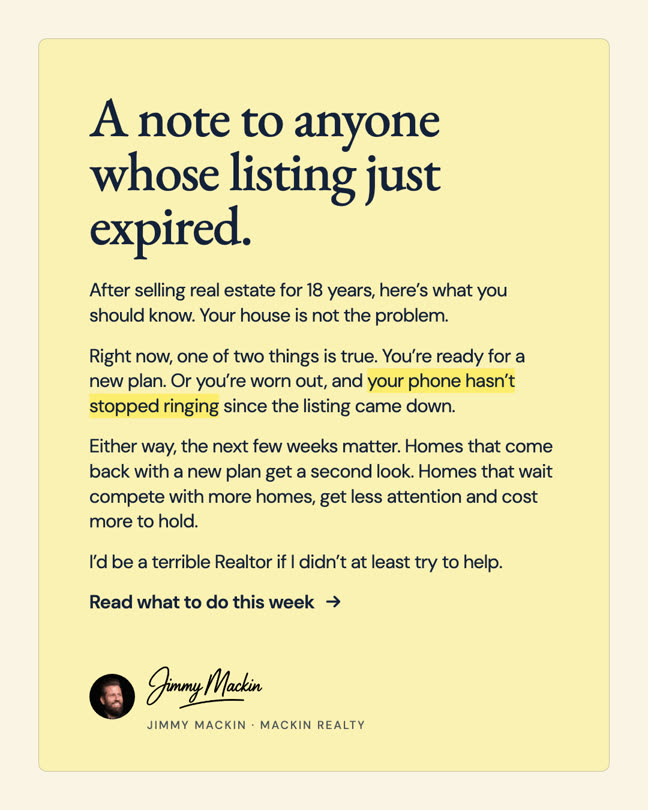
A note to anyone whose listing just expired.
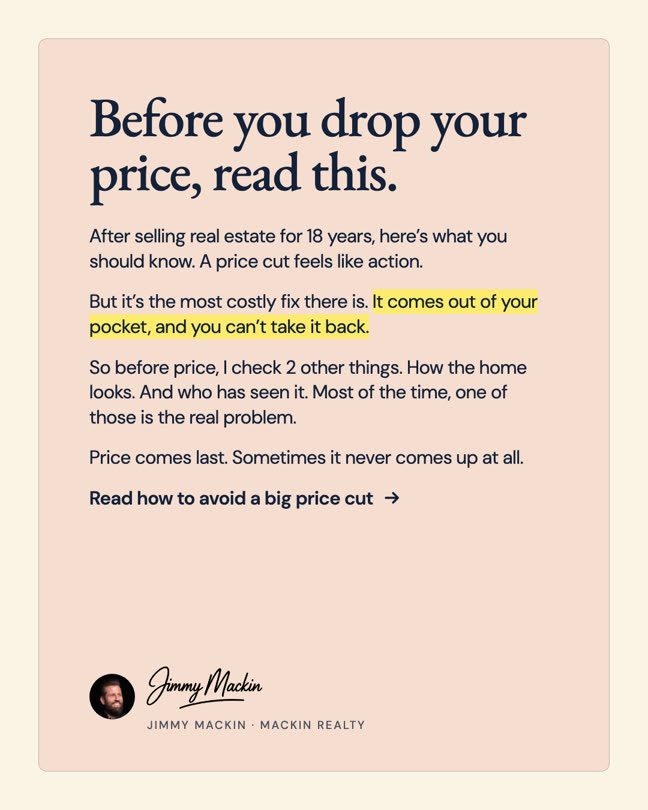
Before you drop your price, read this.
THE LOOK: the agent’s note. A soft tinted card on a cream page. A serif title, then a short letter from me in 4 small paragraphs. It opens: "After selling real estate for [your number] years, here’s what you should know." Highlight the one line that names the fear. The last line is bold and points to the article. Sign it with my name: [attach your signature]. Motion: the paragraphs come in one by one and the signature writes itself.
The labeled graphic
Borrowed from A Waymo and Tesla comparisonA plain white graphic with thin lines that point at the parts.
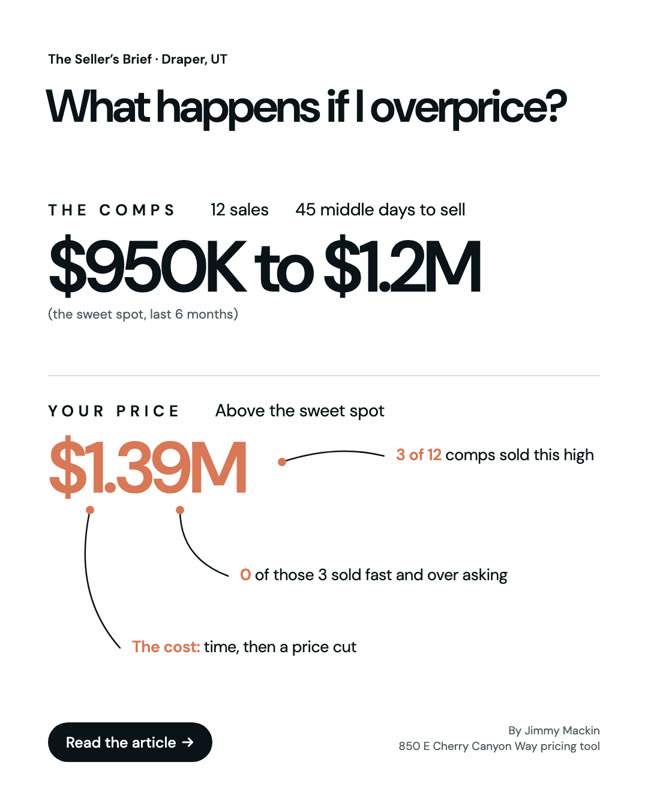
What happens if I overprice?
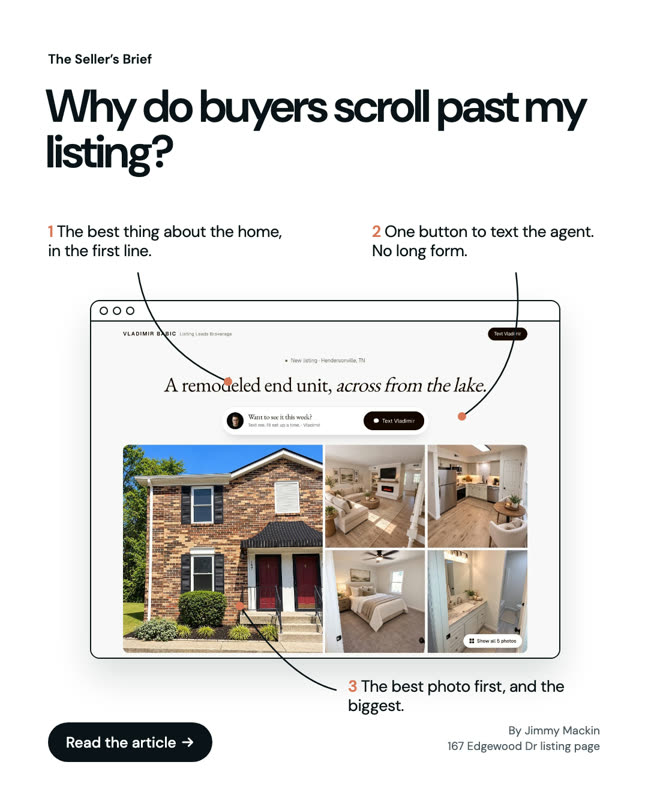
Why do buyers scroll past my listing?
THE LOOK: the labeled graphic. A plain white page. Show one real thing large: [a screenshot of your listing page, or your real price numbers]. Draw 3 thin lines from parts of it out to short labels that say why each part matters. Motion: the lines draw out one at a time and each label fades in.
Fill in the blank
Borrowed from Tommy Hilfiger’s 1985 billboardA white billboard with blanks. The reader starts to guess before the letters fill in.

What 3 things sell a home?
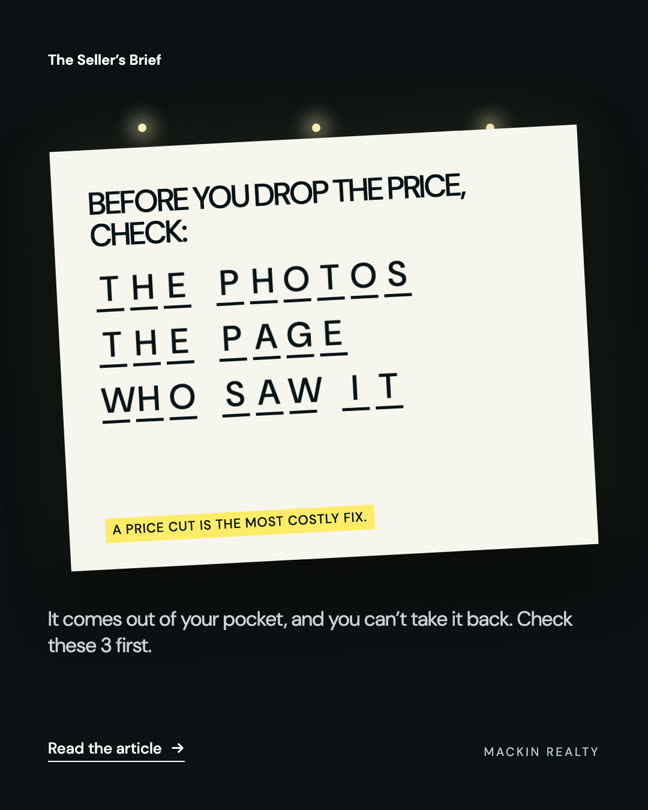
What do I check before a price cut?
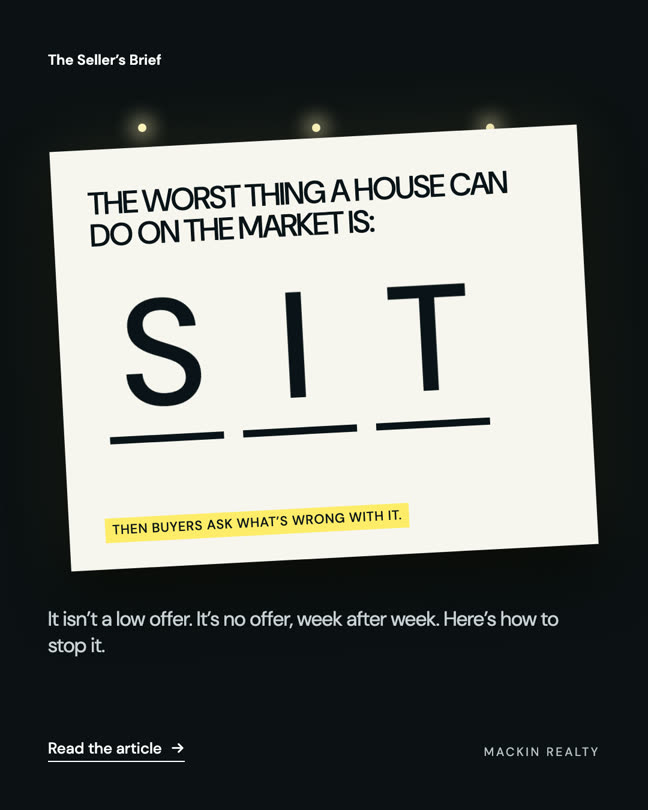
What’s the worst thing my house can do?
THE LOOK: fill in the blank. A white billboard, tilted a little, on a dark field. It asks one question in capital letters, then shows the answer as blanks with only the first letter of each word. Motion: after 2 seconds the letters fill in one by one. One short line in a yellow strip sits at the bottom of the billboard.
The bento
Borrowed from The Interfere design system cardA grid of soft cards with small working pieces around the fear.
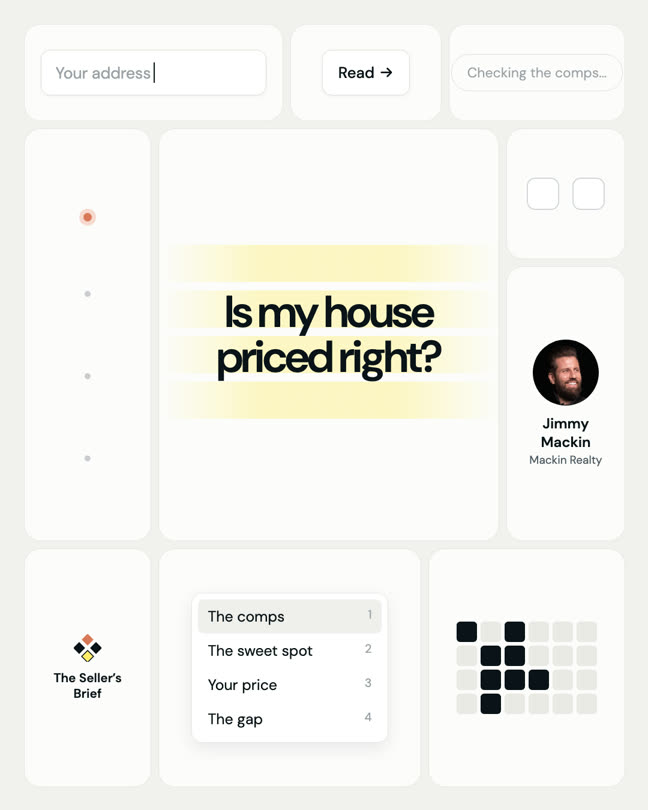
Is my house priced right?
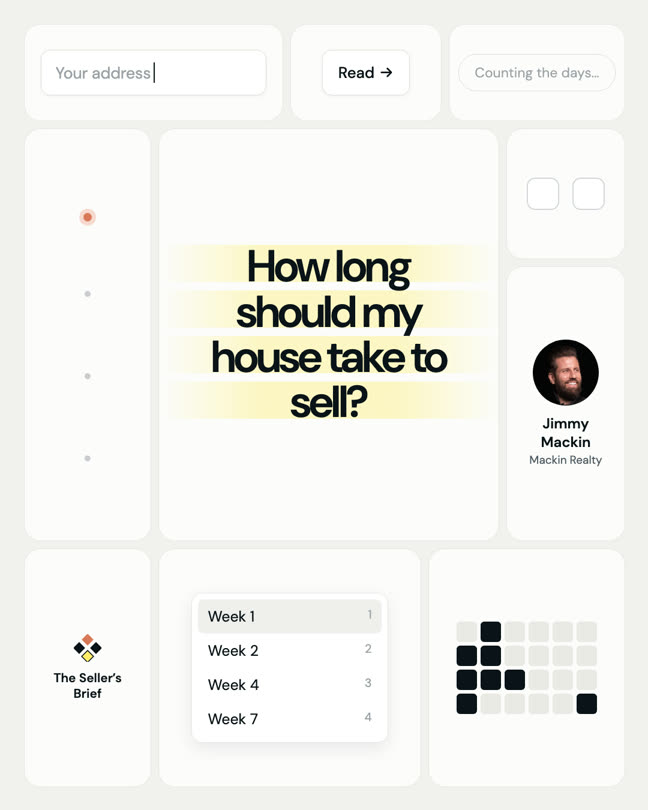
How long should my house take to sell?
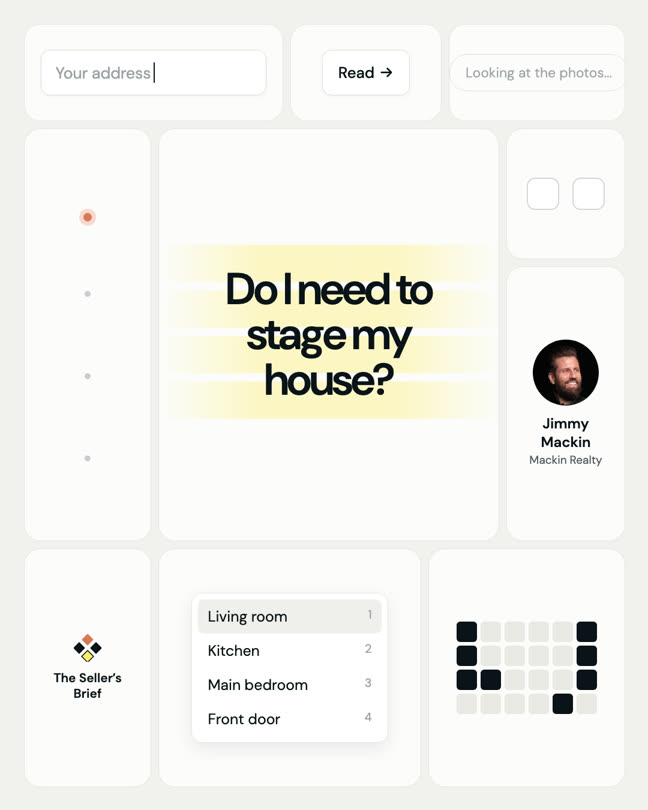
Do I need to stage my house?
THE LOOK: the bento. A grid of soft rounded cards on a pale page. The big middle card holds the headline. The small cards around it each hold one working piece: an address field, a "Read" button, a status line, a stepper, a checkbox, a short menu of the article’s steps, and my photo and name. Motion: the stepper moves, the box ticks and the menu scrolls.
Make them your own.
Four things to change before you run one.
- Your numbers. The price numbers in our examples come from one real pricing check in Draper, Utah. Use sales from your own market, or use none.
- Your years. The agent’s note opens with “After selling real estate for 18 years.” Put in your real number.
- Your photos. We used real photos from one real listing. Show homes you sold, or homes like the seller’s.
- Your article. Write it before you run the ad. The ad makes a promise, and the article has to keep it.