Real Estate Open House: 2026 Agent Tips
Learn how a real estate open house becomes a lead engine with smart promotion, neighbor outreach, and fast follow-up that turns visitors into clients.
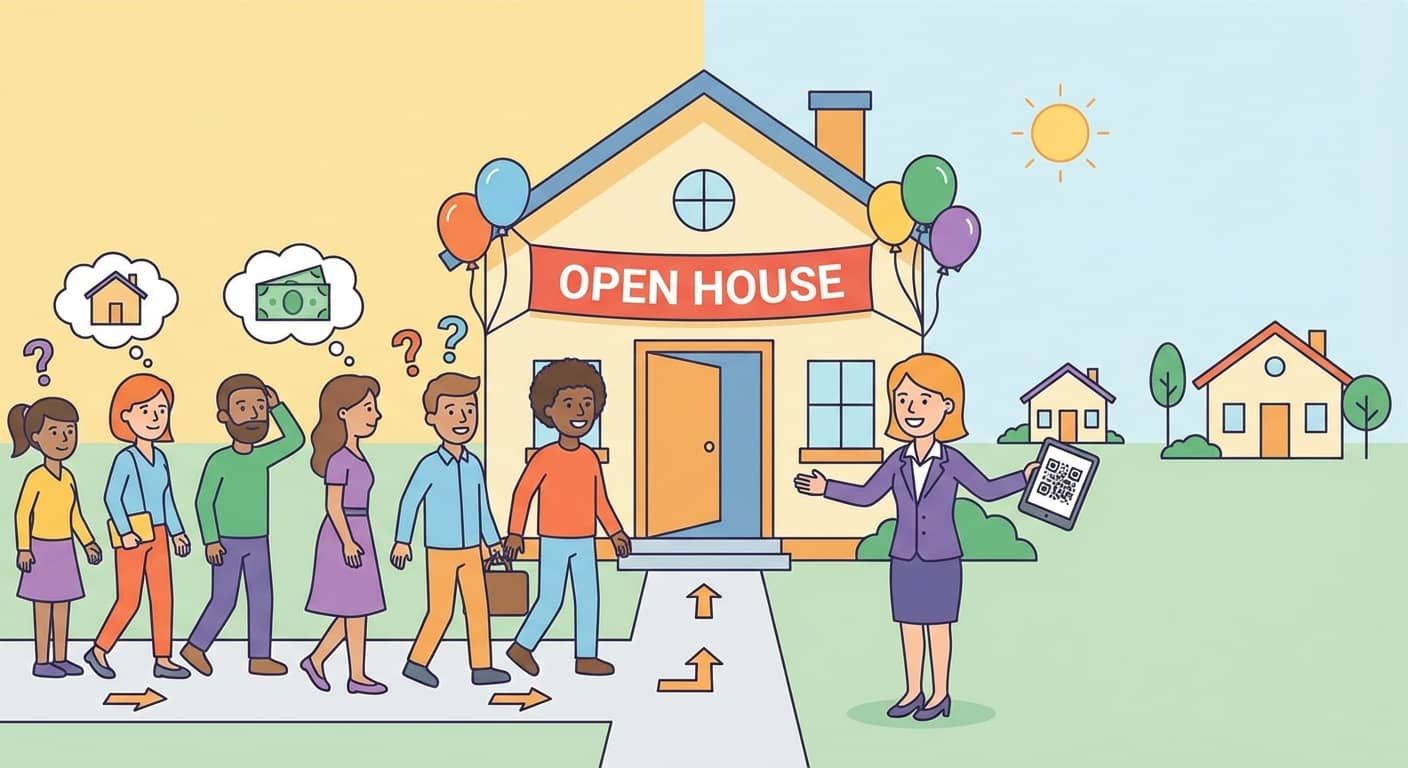
Learn how a real estate open house becomes a lead engine with smart promotion, neighbor outreach, and fast follow-up that turns visitors into clients.
Turn Every Real Estate Open House Into New Clients
An open house can be a complete waste of a Sunday.
Or it can be one of the easiest ways to stack real conversations in a short window.
The difference isn’t the balloons or the cookies. It’s whether you treat the open house like an event you’re hosting for the seller, or an event you’re hosting for your business.
Because the real opportunity usually isn’t the buyer walking through for the first time. It’s the neighbor who “just wanted to see it.” The couple who’s moving in six months. The renter who wants to buy next year. The buyer’s aunt who “knows someone thinking about selling.”
Open houses pull those people out of hiding. Your job is to capture them, qualify them, and follow up while you’re still fresh in their mind.
Why open houses are still worth it
Buyers can see everything online. That’s true.
But an open house gives them something online can’t: a low-pressure first meeting with you. They get to watch how you talk, how you answer questions, and whether you feel like someone they’d trust.
And for neighbors, an open house is basically a market update you can walk through. They’re comparing finishes. They’re checking the price. They’re trying to figure out what their own home might be worth. They’re not always ready to say that out loud, but it’s usually what they’re thinking.
If you handle those conversations well, you walk out with more than a visitor count. You walk out with future listings.
The open house that wins starts days before the open house
Most agents “promote” an open house by throwing it on the MLS and posting it on Instagram once.
Then they wonder why nobody comes.
Traffic is built. It’s not luck.
Start a week out and make it feel like something is happening. Not in a hypey way. In a clear, local way.
Invite the closest neighbors. Not because they’re buyers. Because they’re connectors. They have friends. Family. Co-workers. They also become the best source of seller leads if you stay in touch.
Put real signs out. Not one sign at the corner of the street. Enough to guide someone from the nearest main road without guessing. If people get lost, they give up.
Promote online, but don’t overcomplicate it. A short walk-through video with the date and time does more than a polished graphic most of the time. People want to see the home, not your Canva skills.
Then, the morning of, remind your database. One simple text or email is enough. The goal is not to spam. The goal is to catch the people who were interested but forgot.
The moment of truth is your sign-in
Most open houses fail because the agent leaves with a stack of fake names and emails that bounce.
Paper sign-in sheets invite lies. They also create work later. That’s why the best open houses use digital capture.
A QR code at the entry is the easiest. A tablet form also works. The point is speed and accuracy.
If you want real contact info, give them a reason. Not a bribe. A reason.
A floor plan link. Disclosures. A neighborhood sales snapshot. A list of similar homes.
Something they already want.
Keep the form short. If it feels like a mortgage application, they’ll skip it.
If you ask more than a couple questions, you’ll lower completion rates. Two is plenty:
- “Are you working with an agent?”
- “What’s your timeline?”
That’s enough to know how to treat the lead.
Your job inside the open house isn’t “host.” It’s “qualify.”
You’re not there to stand by the kitchen island and wait for compliments.
You’re there to learn who walked in.
Buyers will tell you everything if you ask the right questions. Not in an interrogation way. In a normal conversation way.
“How long have you been looking?”
“Are you already in the neighborhood or relocating?”
“What’s the one thing you have to have in the next house?”
Those questions do two things. They build rapport, and they give you context for follow-up.
Neighbors need a different conversation.
The easiest way to spot them is just to ask: “Are you from around here?”
If they are, you don’t pitch a listing. You offer a small value.
“I’m happy to send you a quick street report so you can see what’s selling nearby. No pressure.”
That’s it. Low-key. Helpful. You’re planting a flag as the local resource without acting like a salesperson.
The fastest follow-up wins the lead
The open house isn’t the finish line. It’s the top of the funnel.
The leads are hottest right after they leave. If your first follow-up is two days later, you’re competing with their entire life again. Work. Kids. Distractions. Other showings.
Send something quickly while the home is still in their head.
A short text works best. It feels personal. It opens a thread.
“Great meeting you at [Address]. Here’s the floor plan we talked about: [link]. Want me to send a couple similar homes?”
That one line does three things. It reminds them of you. It delivers value. It asks a simple question that keeps the conversation going.
Neighbors get a different message.
“Thanks for stopping by. Want me to send that quick street report so you can see what homes are selling for right now?”
It’s calm. It’s useful. It doesn’t assume they’re selling tomorrow.
If you tag leads by intent—buyer, neighbor, seller-curious—your follow-up becomes easier. You stop guessing. You stop sending the same message to everyone.
Safety and professionalism matter more than people admit
Open houses are public events. Treat them like it.
Keep valuables and medications locked up if you’re the homeowner. If you’re the agent, encourage the seller to secure anything personal and to leave the home during the event.
Control entry and flow. Be aware of who is in the house. That’s not paranoia. That’s professional hosting.
And keep your language clean. No steering. No “perfect for families.” No “safe neighborhood.” Describe the home and objective location benefits. Let people decide if it fits.
The open house becomes a system when you track it
If you want open houses to turn into real business, track a few simple things:
- How many visitors came through
- How many gave real contact info
- How many conversations you started afterward
- How many appointments you booked
You don’t need fancy dashboards. You need a habit.
When you see the numbers, you know what to fix. If visitors are low, promotion is weak. If sign-ins are low, your capture is clunky. If follow-up isn’t converting, your message is too generic or too slow.
That’s how an open house stops being a weekly chore and starts becoming a client machine.
FAQ
Do open houses still work in 2026?
Yes, but not because buyers can’t find homes online. Open houses work because they compress attention into a short window and give buyers and neighbors a low-pressure way to engage. Even when the eventual buyer doesn’t come from the open house, the event often creates momentum: more showings, more conversations, more feedback, and more visibility. For agents, it’s also one of the few places you can meet buyer leads and future seller leads in person without needing an introduction.
How do I get more people to actually show up?
Start promotion earlier than most agents do and make it feel local. Put it on the MLS, but don’t rely on that. Invite neighbors directly, because they either become referral sources or future sellers. Post a short walk-through video with the date and time instead of a generic graphic. Place enough signs that someone can find the house from the nearest main road without guessing. Then send a simple reminder the morning of to your database. Most turnout problems are promotion problems, not “market” problems.
What’s the best way to collect contact info without being awkward?
Make sign-in about value, not compliance. A QR code at the entry tied to something people want—floor plan, disclosures, neighborhood report—feels natural. Keep the form short and visible, and tell them what happens next: “This is just so I can send you the info you asked for.” Paper sheets lead to fake emails and bad handwriting, which makes your follow-up weaker. Digital capture is cleaner because it’s fast, accurate, and immediately usable.
What should I ask on the sign-in form?
Two questions is plenty because more questions reduce completion. Ask whether they’re working with an agent and what their timeline is. That tells you how to follow up and whether the conversation should be buyer-focused or more general. If you want one extra question, make it simple: “What are you hoping to find?” That single answer gives you a hook for your follow-up message.
How do I turn neighbors into listing leads without sounding salesy?
Treat it like a street-level market update. Ask if they live nearby, then offer a small, specific value: “Want me to send you a quick street report so you can see what homes are selling for right now?” Don’t pitch a listing appointment at the open house. Neighbors are usually there to compare and gather info. If you give them clarity without pressure and then follow up consistently, you become the agent they call later when they’re ready.
How fast should I follow up after the open house?
Same day, and ideally within minutes for people who signed in. Interest drops fast once they leave and start thinking about other things. A short text that references the home and delivers something useful works best: a floor plan link, disclosures, or a couple similar listings. The goal is to open a real conversation thread while the home is still fresh, not to send a generic “thanks for coming” email two days later.
What’s the simplest follow-up that actually gets replies?
A short text that delivers value and asks an easy question. Something like: “Great meeting you at [Address]. Here’s the floor plan we talked about: [link]. Want me to send a few similar homes?” For neighbors: “Thanks for stopping by. Want that quick street report so you can see what sold nearby?” These messages work because they feel personal, they remind them who you are, and they give them a clear reason to respond.
How do I know if open houses are worth my time?
Track three numbers: visitors, real sign-ins, and conversations booked afterward. If you’re not getting visitors, your promotion and signage need work. If you’re getting visitors but not sign-ins, your capture system is too clunky or you’re not offering a clear reason to sign in. If you’re getting sign-ins but no conversations, your follow-up is too slow or too generic. Open houses become worth it when you treat them like a system, not an event.